 ViaVela
ViaVela · Clinics
Medeor assists the clinic. A clinician decides, every time.
Clinic workflow and patient scheduling with AI-assisted triage suggestions. The design rule that governs everything: the software suggests, a human clinician confirms. Nothing the AI says ever orders care on its own.
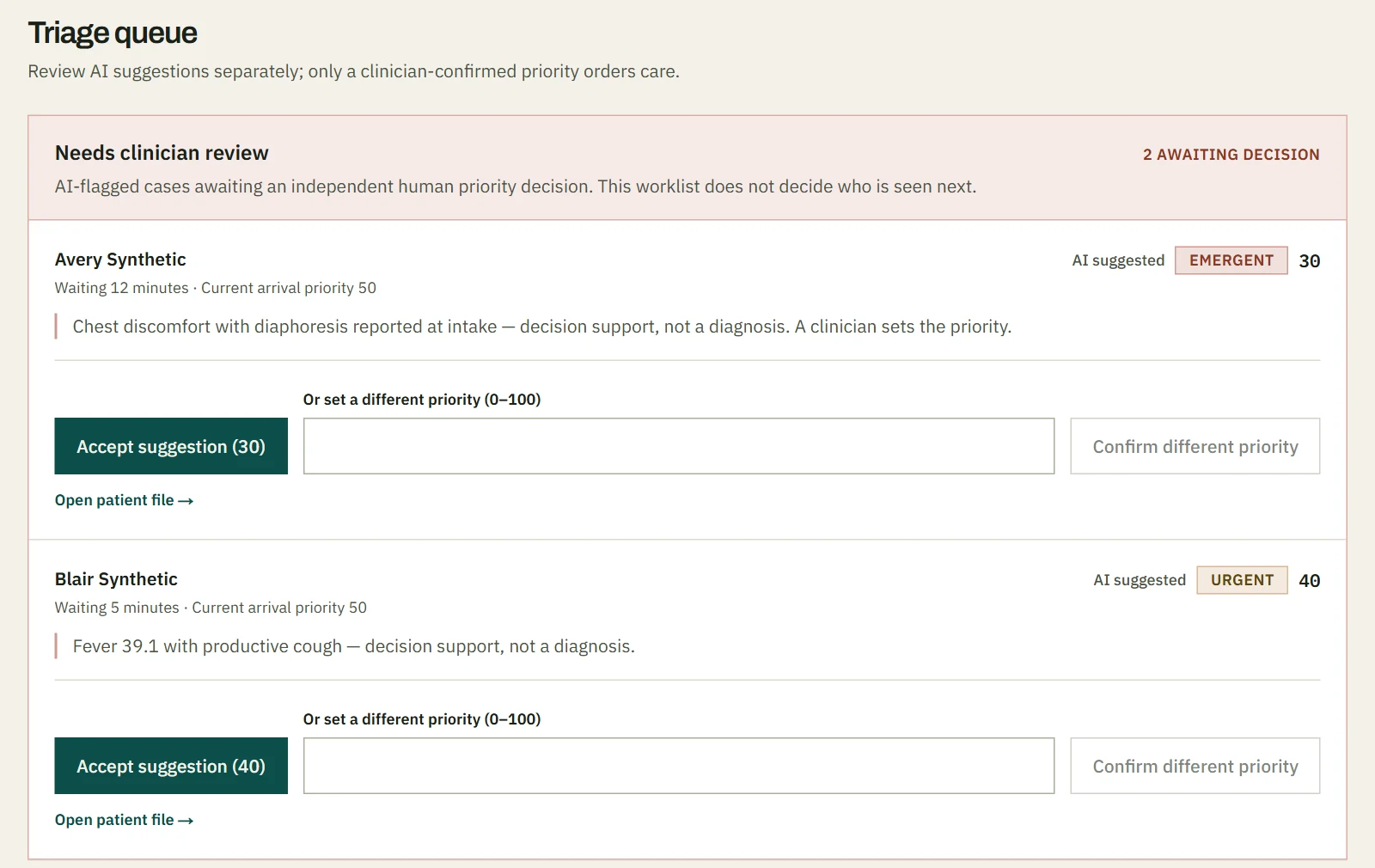
The AI never decides
- A suggestion looks like a suggestion
- Every triage suggestion is labeled as one and sits in a review list until a clinician or nurse confirms a priority. The schedule orders itself only by human-confirmed priority.
- Red flags come first
- Where the assistant lists a red flag, it can raise urgency, never lower it. That rule is built into the software itself, not left to the AI's instructions.
- Local first
- The assistant runs on the clinic's own hardware by default. Sending anything to a cloud model is a deliberate switch that says exactly what would leave the premises.
- A reviewable trail
- What was suggested, who confirmed it, and when, on every case, in an audit trail that shows if anyone has altered it.
What Medeor does
- Clinic scheduling
- Appointment scheduling and calendar management for the front desk.
- Patient records
- Records in one place, scoped to the clinicians and staff who need them; encrypted where they rest.
- Needs-review worklist
- Every AI-flagged case lands in a review list, visibly labeled, until a clinician or nurse confirms it.
- Role-scoped portals
- Clinicians, nurses, front desk and patients each see exactly what their role entitles them to, enforced by the server.
Where Medeor is today, said plainly
Medeor is in development. It is not a certified clinical system and it is not cleared for real patient data; evaluations run with synthetic data only, under an evaluation agreement that says so. We describe its security practice as NIST-aligned and claim no certification. Moving that line is a decision we will make with counsel, an independent assessment and a clinic's own obligations in view. It is not a label we will change first.